


Short battles. A long road.
Last Square is a Napoleonic battle simulation cut to roguelike size. Each battle is one sharp engagement, a ridge, a farm, a river crossing, decided in minutes rather than in an afternoon.
Win it and the campaign marches on to the next crossroads with whatever army you have left. The battles are here today. The campaign that strings them together is the part still being built.
A turn is twenty seconds. A battle is over in minutes. The army has to last the whole war.
A battlefield that breathes
Cloud shadows slide over the fields. Trees bend in the gusts, smoke rises from the farmhouse chimneys, and when the guns open up the birds burst out of the woods.
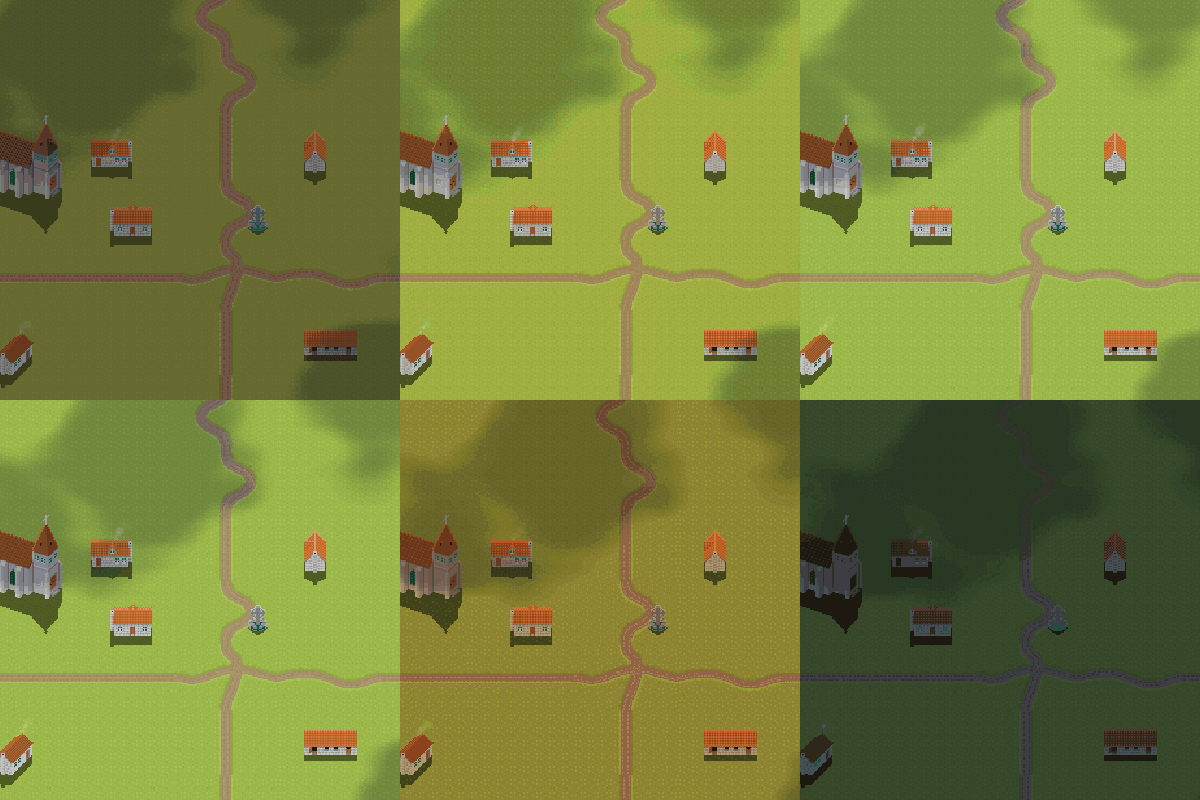
The light follows the clock of the battle: pale at dawn, white at noon, gold and then blue as the day runs out.
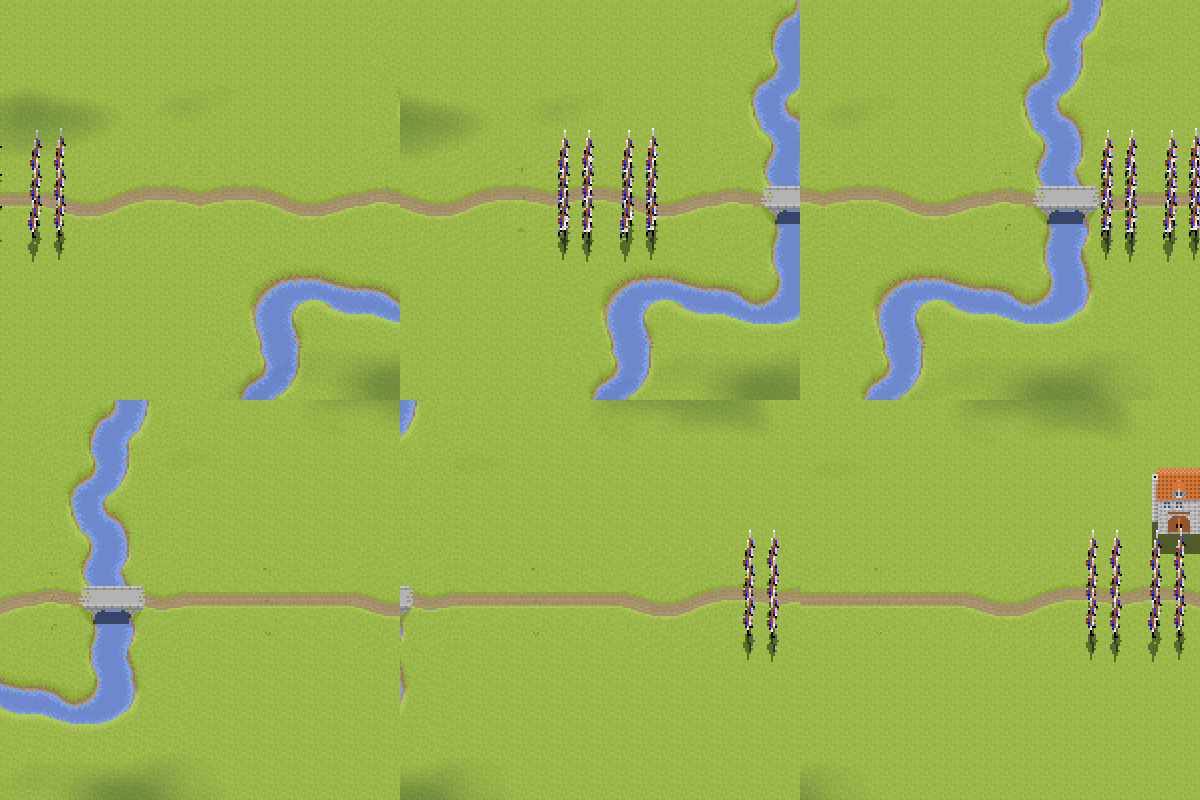
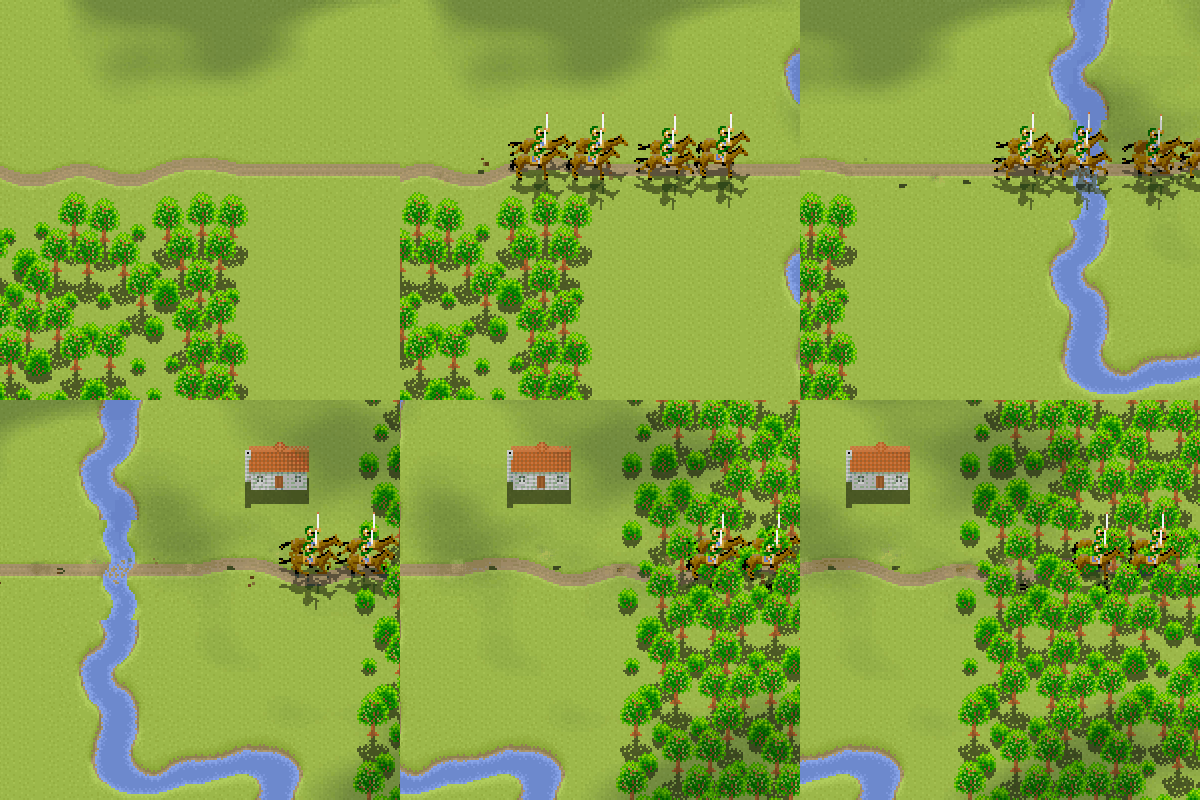
Rivers stop you dead. Unless someone finds the ford.
Twenty seconds a turn
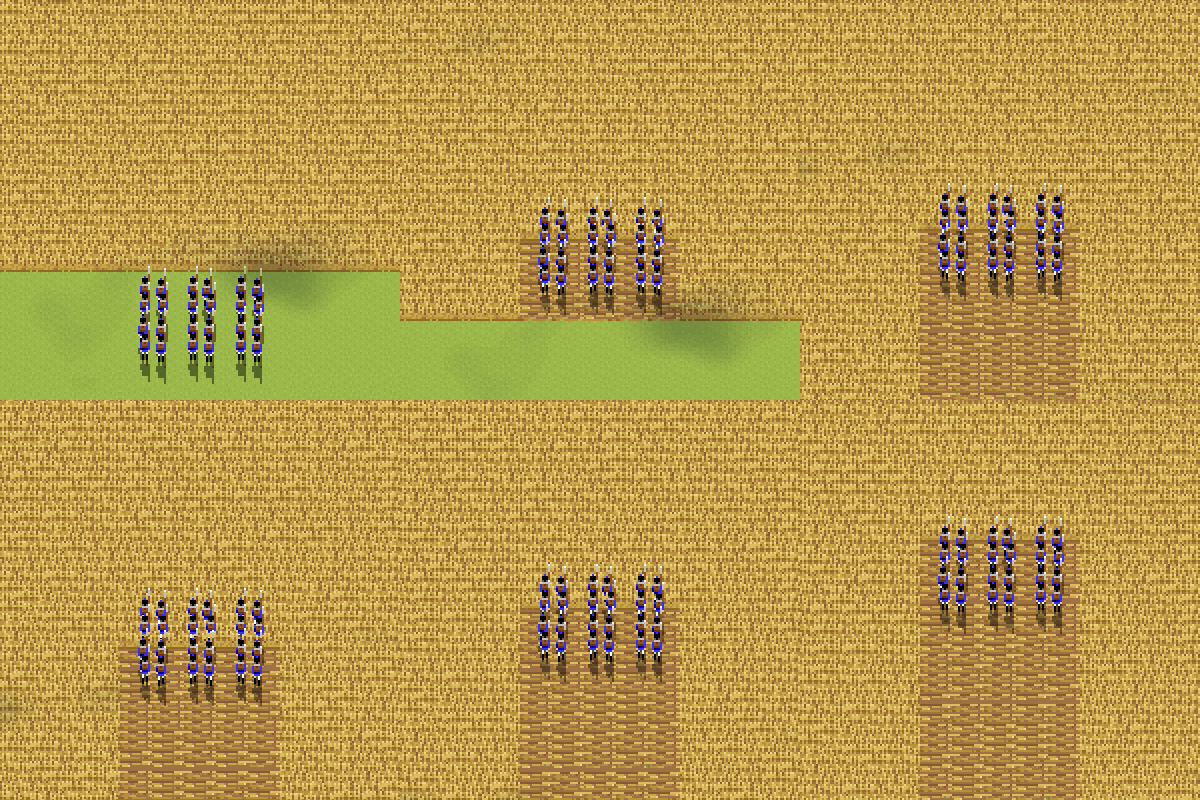
Underneath runs the tabletop: stands measured in inches, the real movement rates, half an hour of battle in every turn. On screen a turn lasts twenty seconds, so the fight moves fast and never waits for you.
That makes every order count. A column needs a full turn to shake out into line, and for those twenty seconds it is neither one thing nor the other. Pick the moment, or the enemy picks it for you.
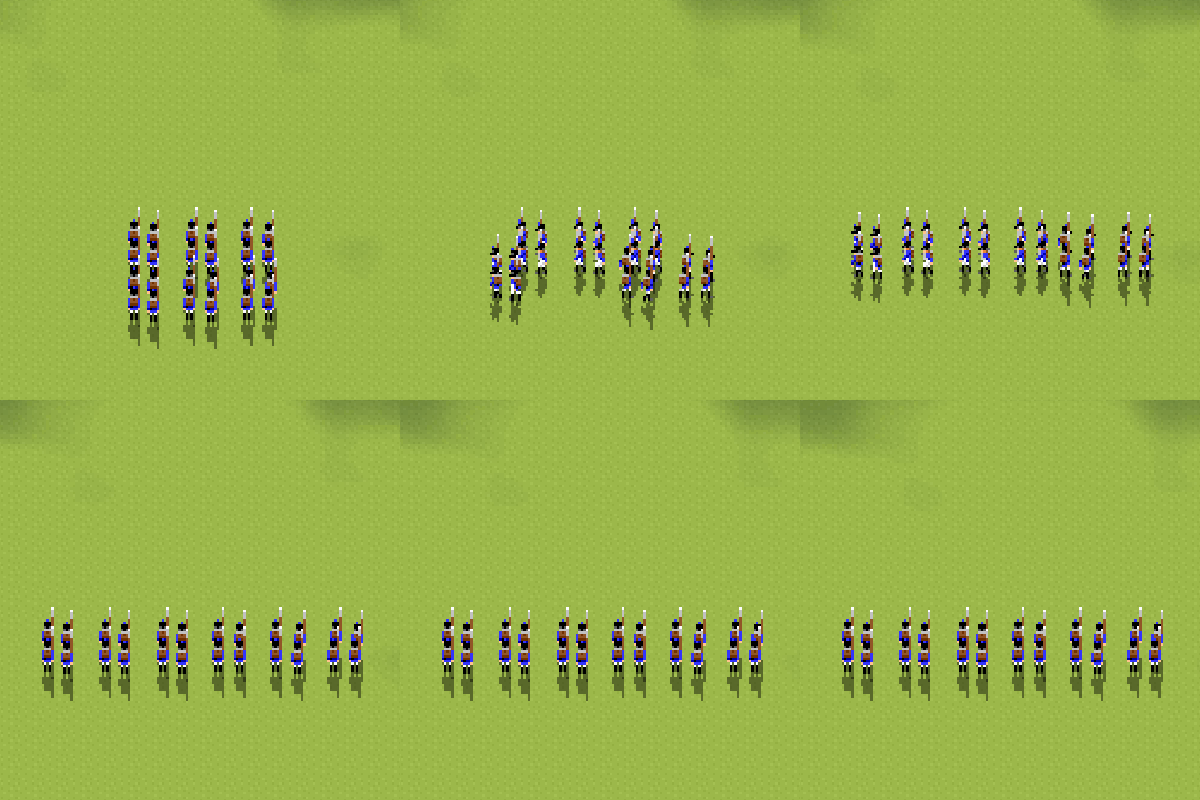
Twenty seconds is half an hour. Don't waste it.
The drill book is real
Line, column and square. Wheel on the inner stand, about face, limber and unlimber. Every manoeuvre costs what the rules say it costs, and while it lasts the unit is busy and exposed.
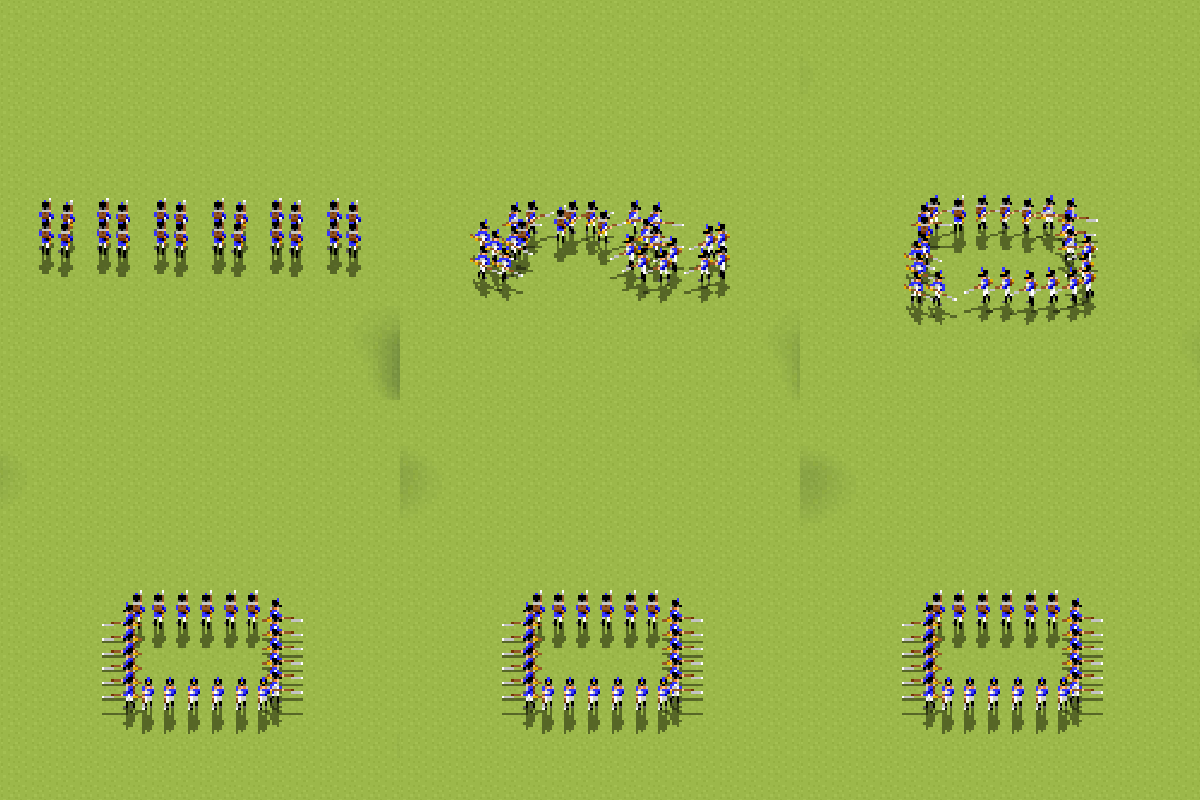
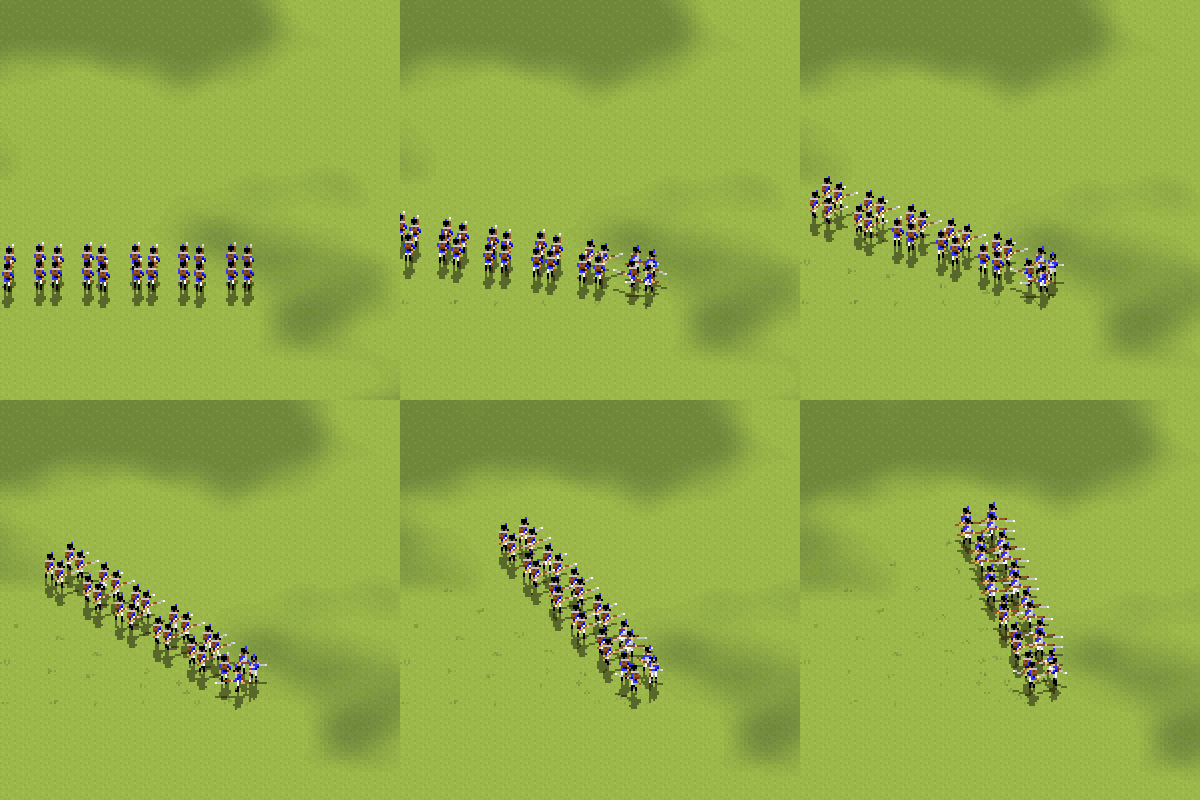
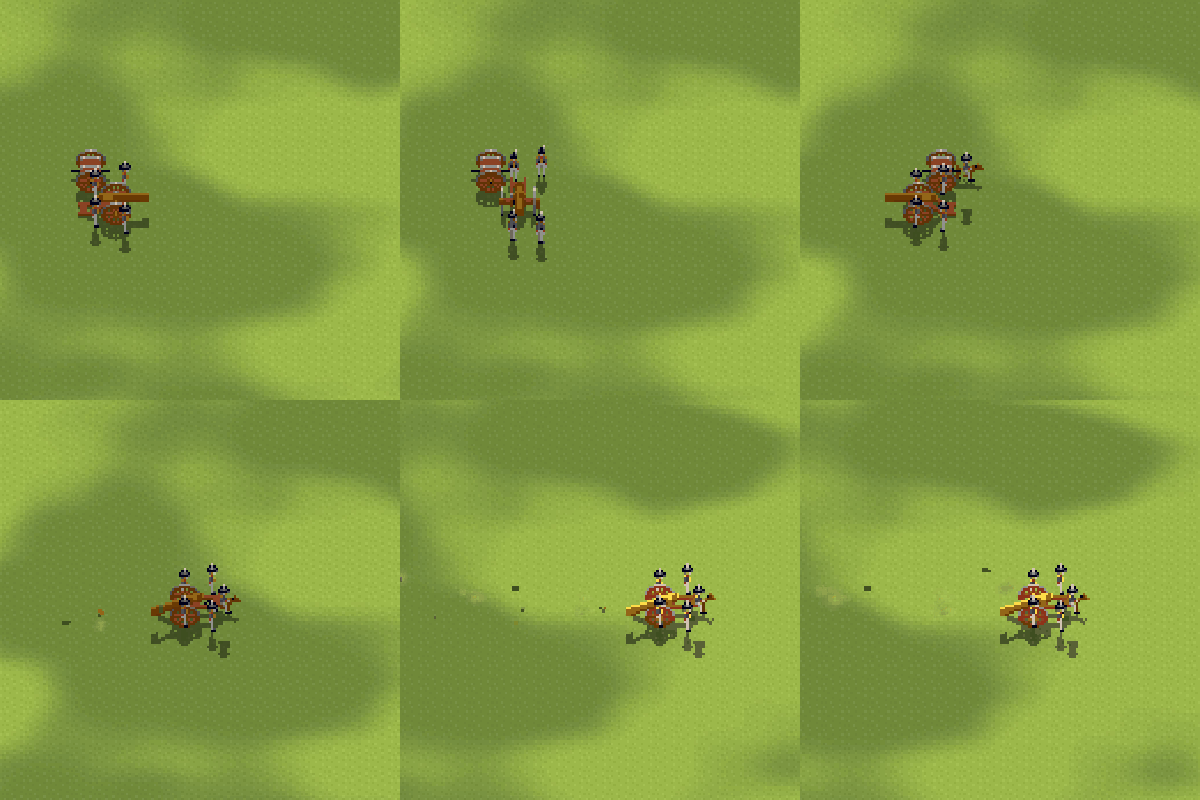
Orders are final. There is no Halt button.
Every volley is a roll of the dice
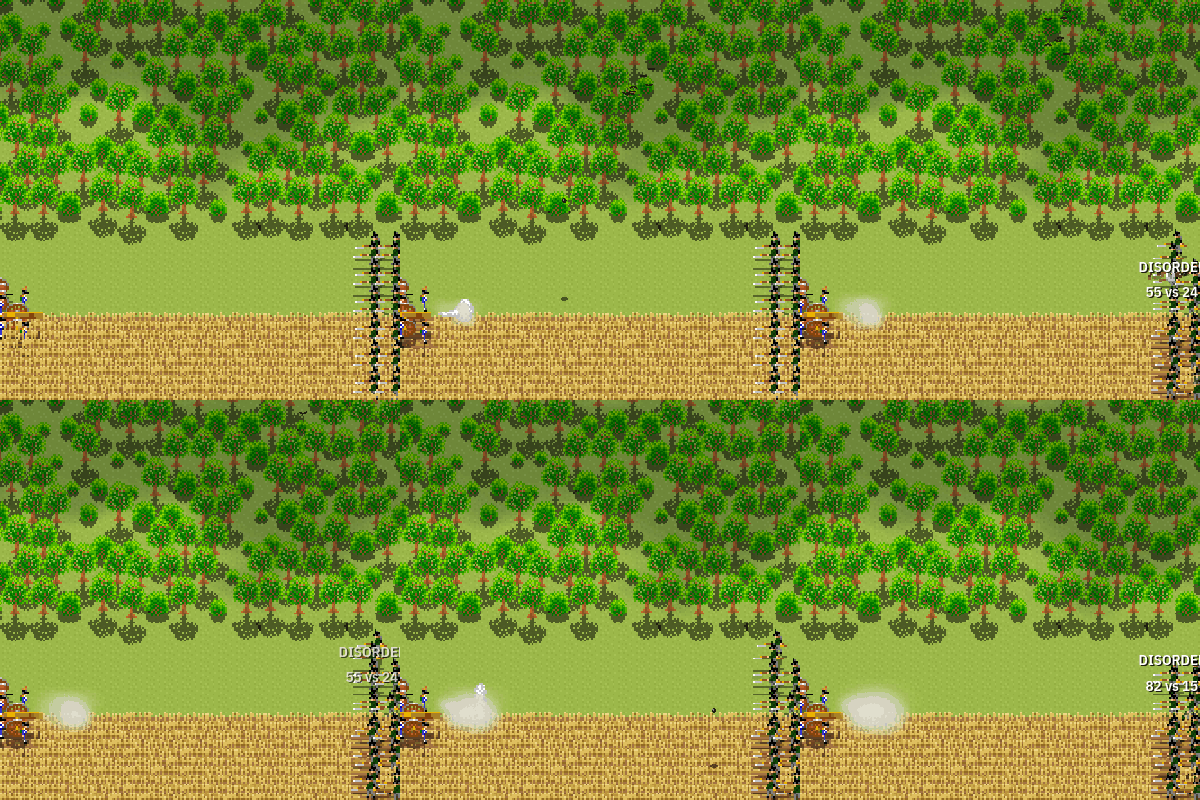
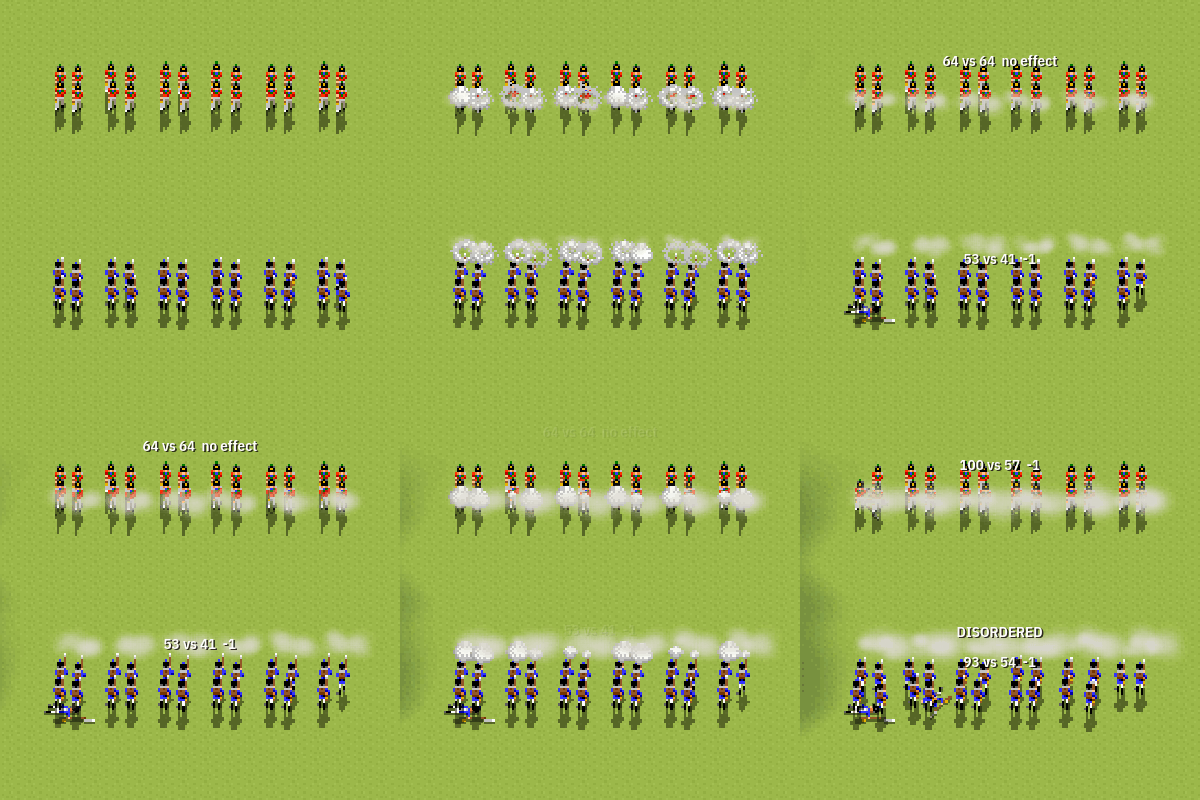
Muskets reach four inches. Every volley is a hundred-sided die plus the modifiers you can read on the unit panel: six stands firing, the target in line, a wall in the way.
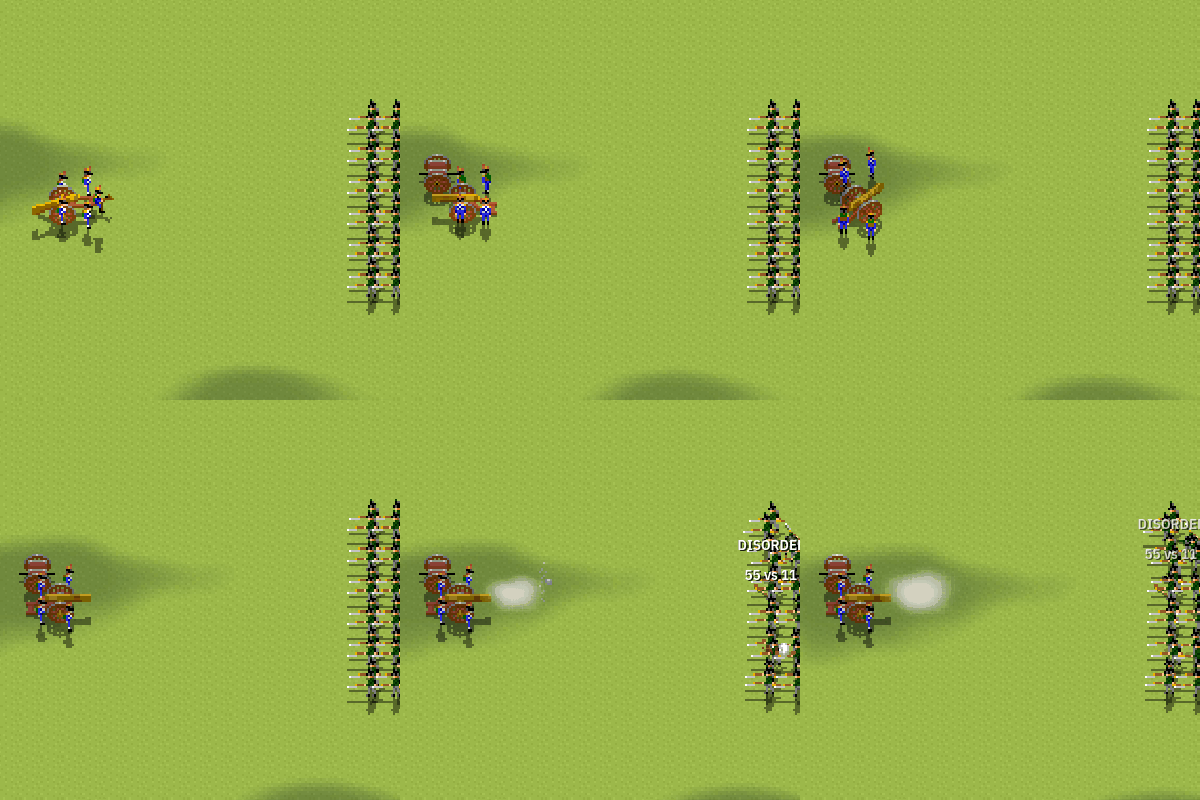
Smoke hangs where it was fired and drifts with the wind. Two losses in one turn and a battalion is disordered. Four, and it runs. The guns are worse.
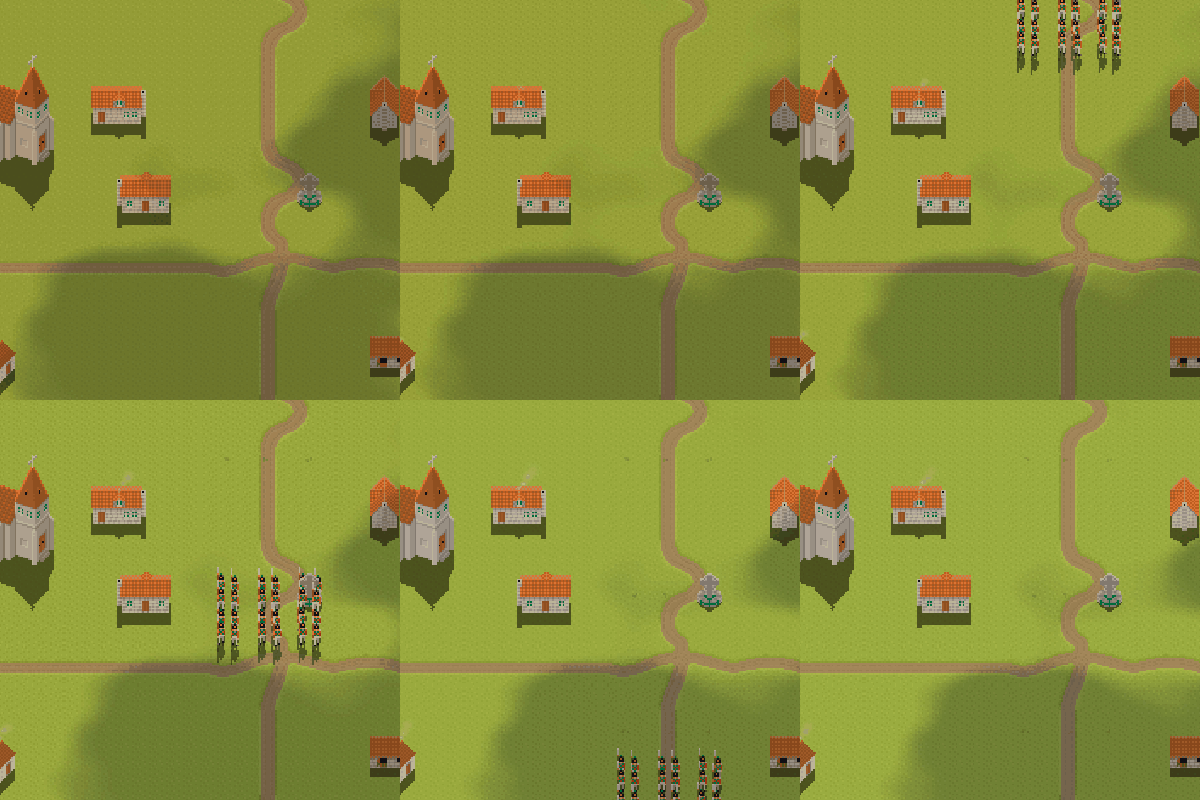
Form square!
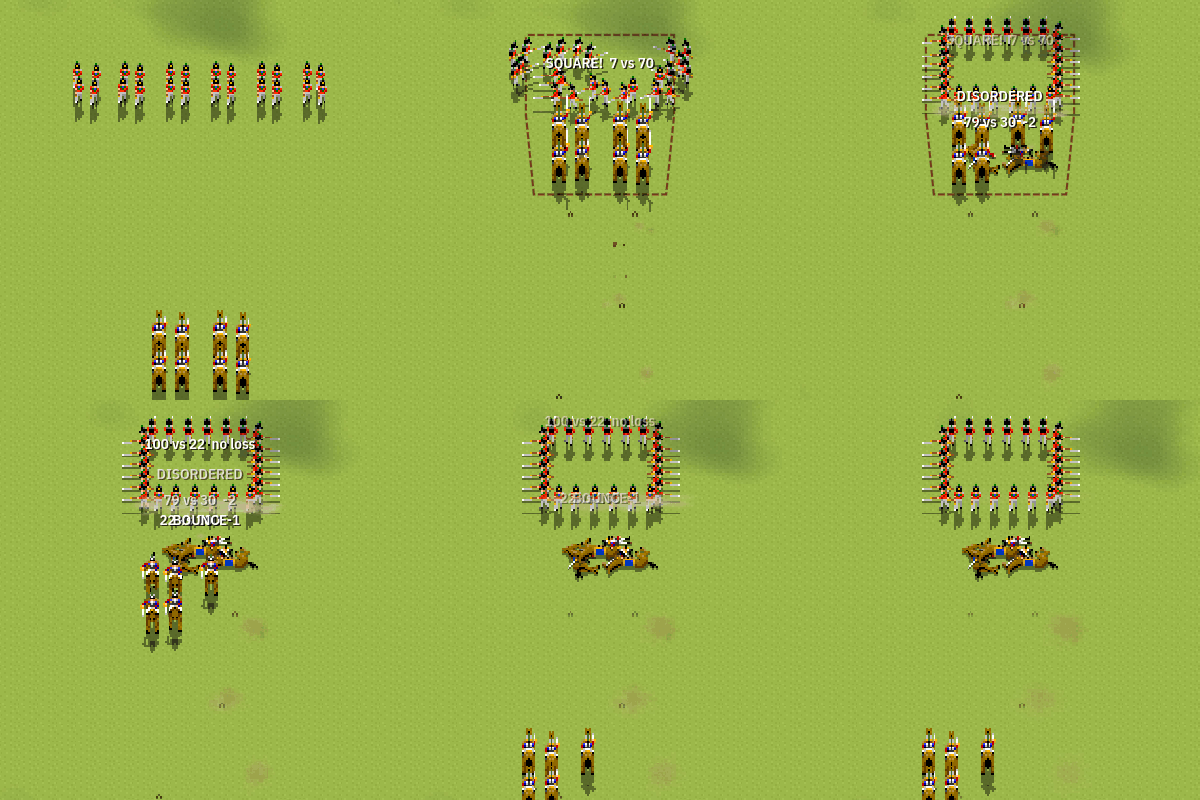
Infantry caught in the open by a charge gets one roll to form an emergency square before the horses arrive.
If the square holds, the cavalry rides back disordered behind its own lines. If it doesn't, nothing in the rules will save that battalion.
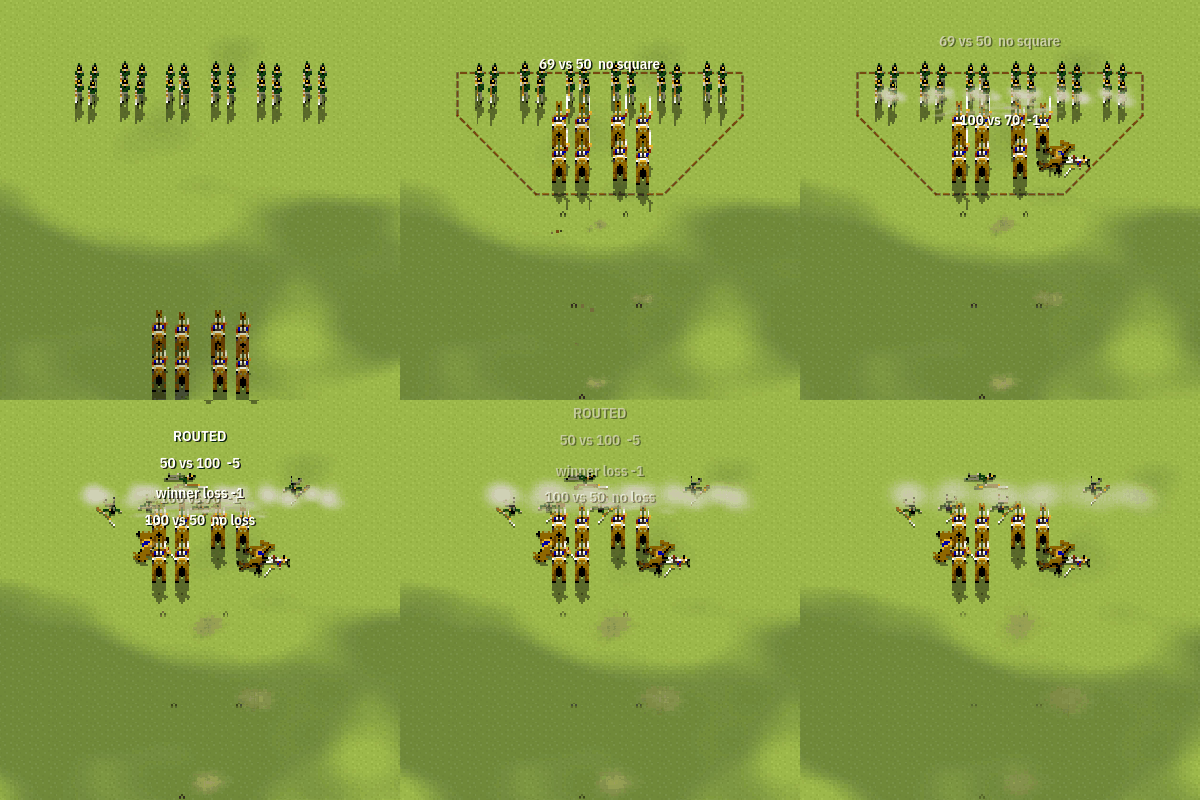
Roll under fifty, or run.
Walls, farms and stubborn men
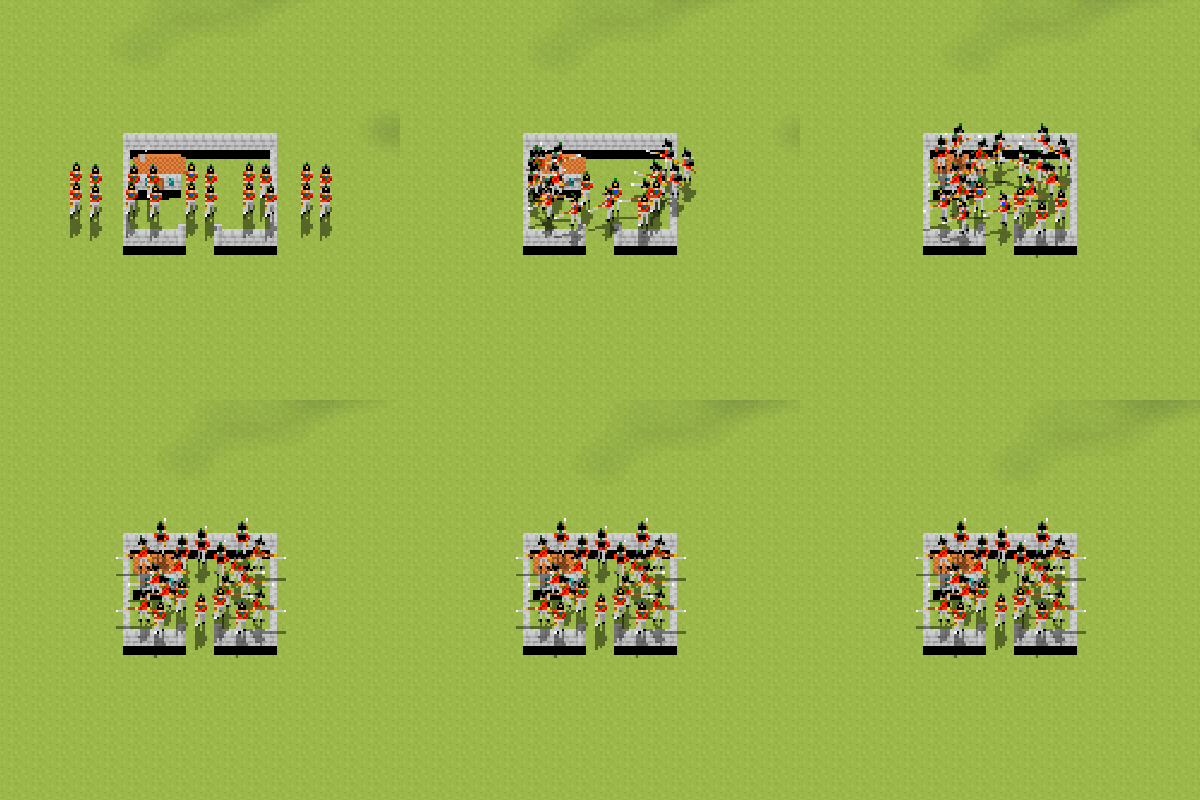
A stone wall is worth twenty points in a melee, a wooden fence ten. Put a battalion inside a walled farm and it fights on four sides, from the loopholes.
The computer commander knows it too. It defends like a staff officer: a line on every objective, a reserve behind it, mobile groups that ride to wherever your attack is gathering, batteries that lead their targets.
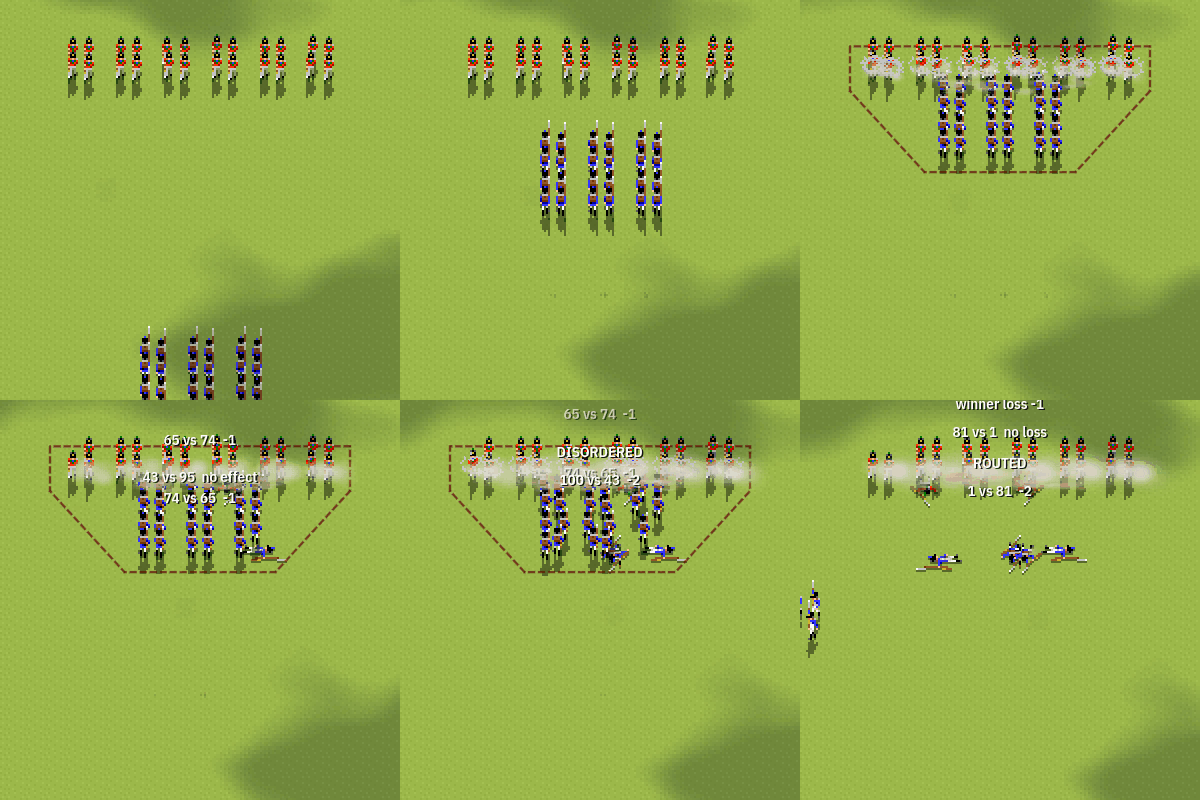
Routed. That column will not come back today.
Every uniform, every regiment
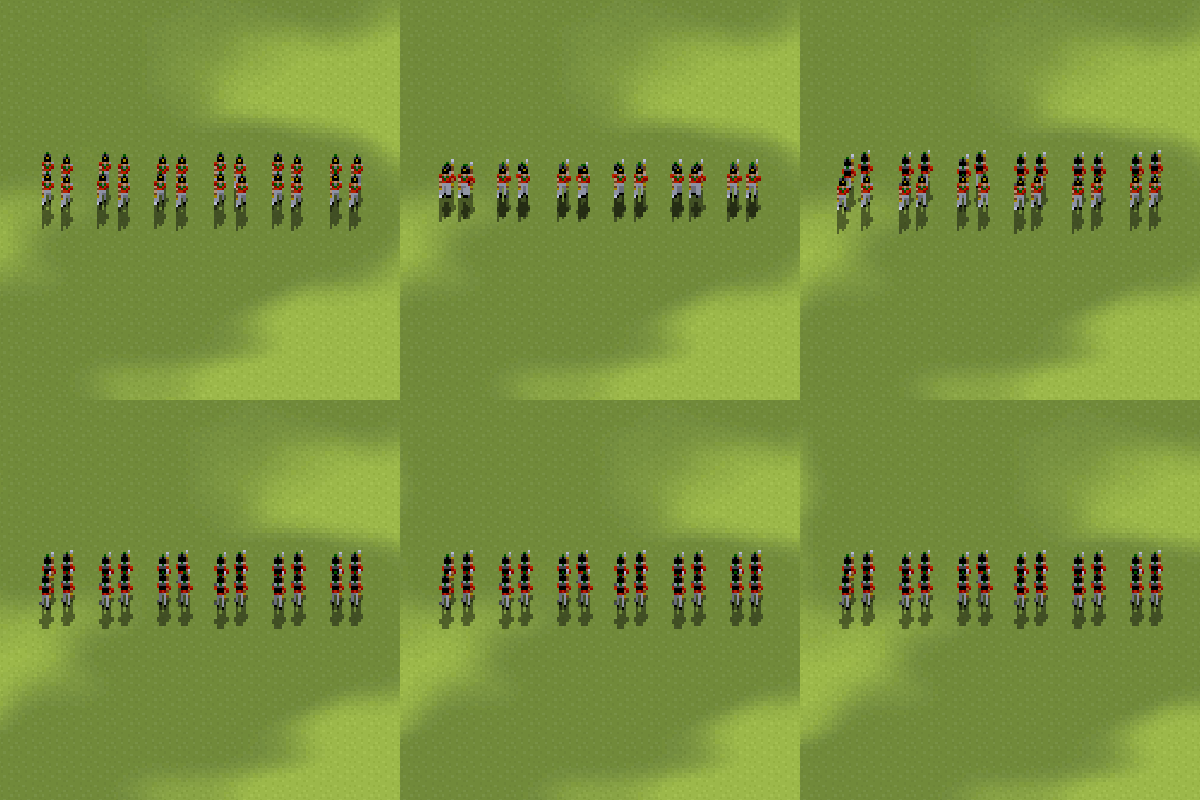
Line and Guard, light infantry and Landwehr, cuirassiers, lancers, hussars and dragoons, foot and horse batteries. Every type keeps its own uniform, its own speed and its own numbers from the tabletop roster.
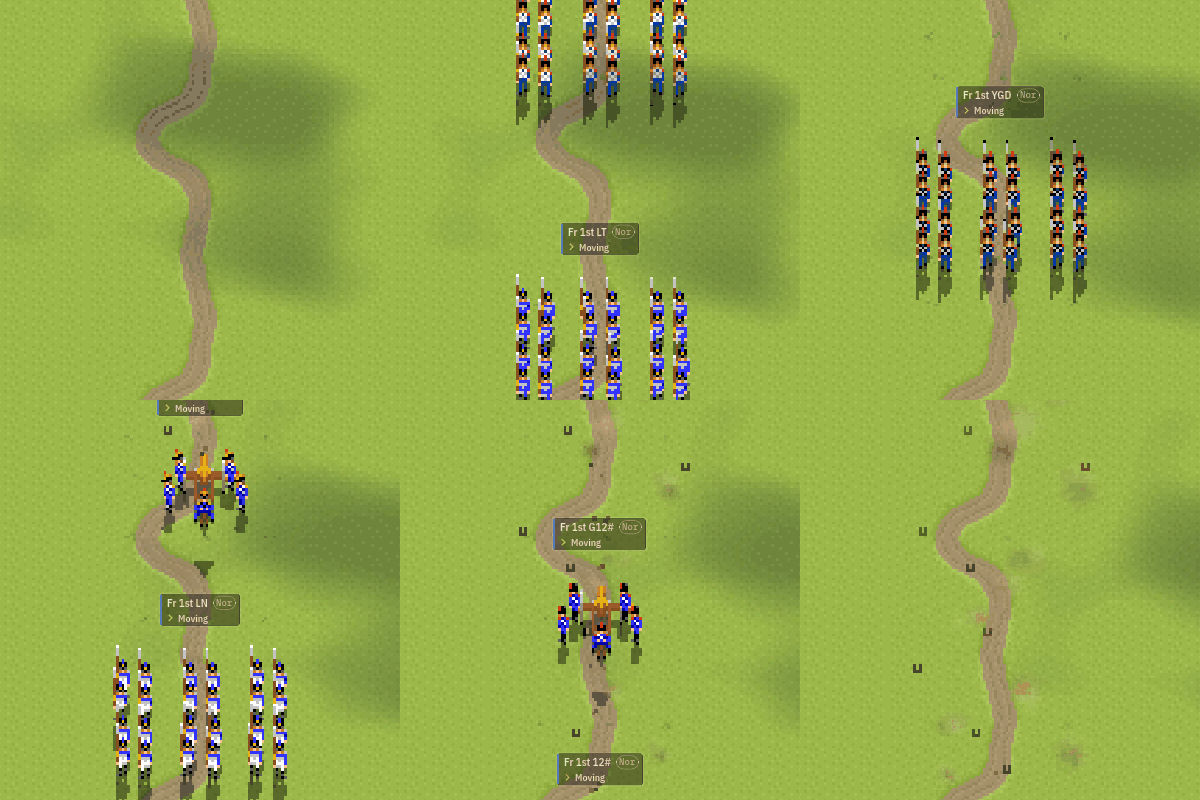
France — foot and guns
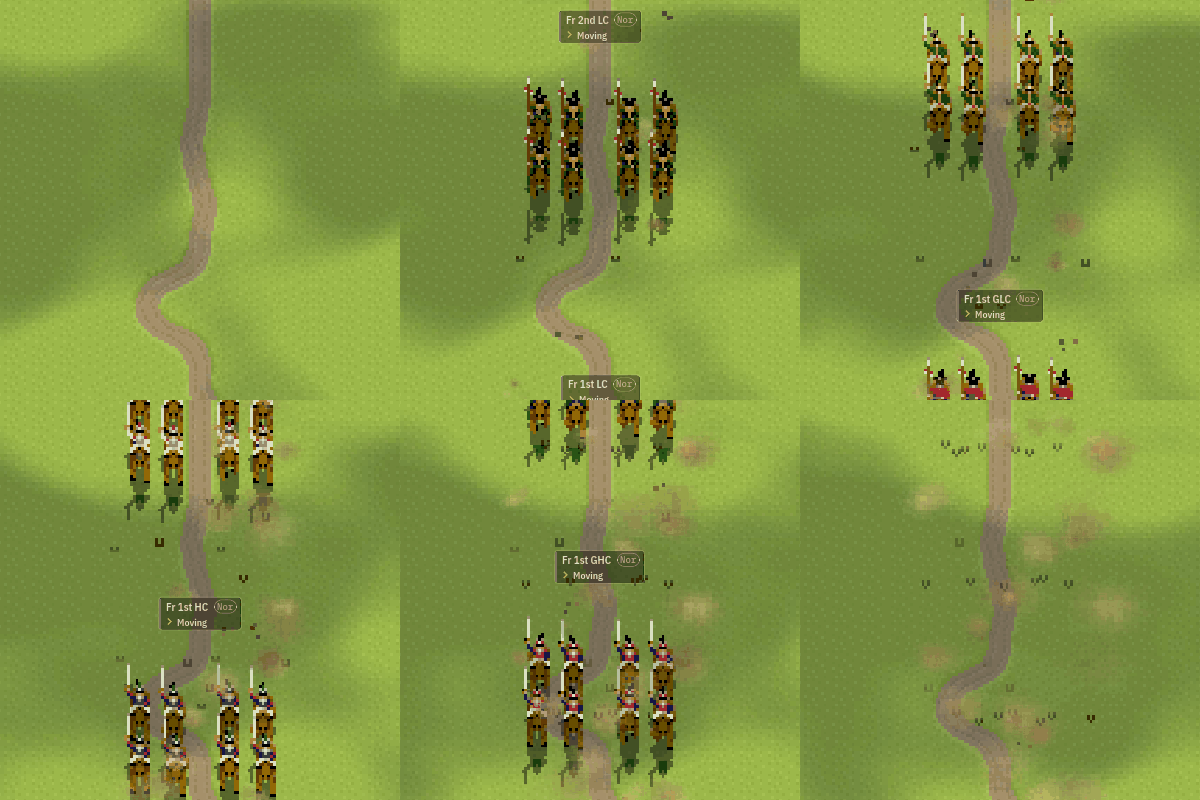
France — the cavalry
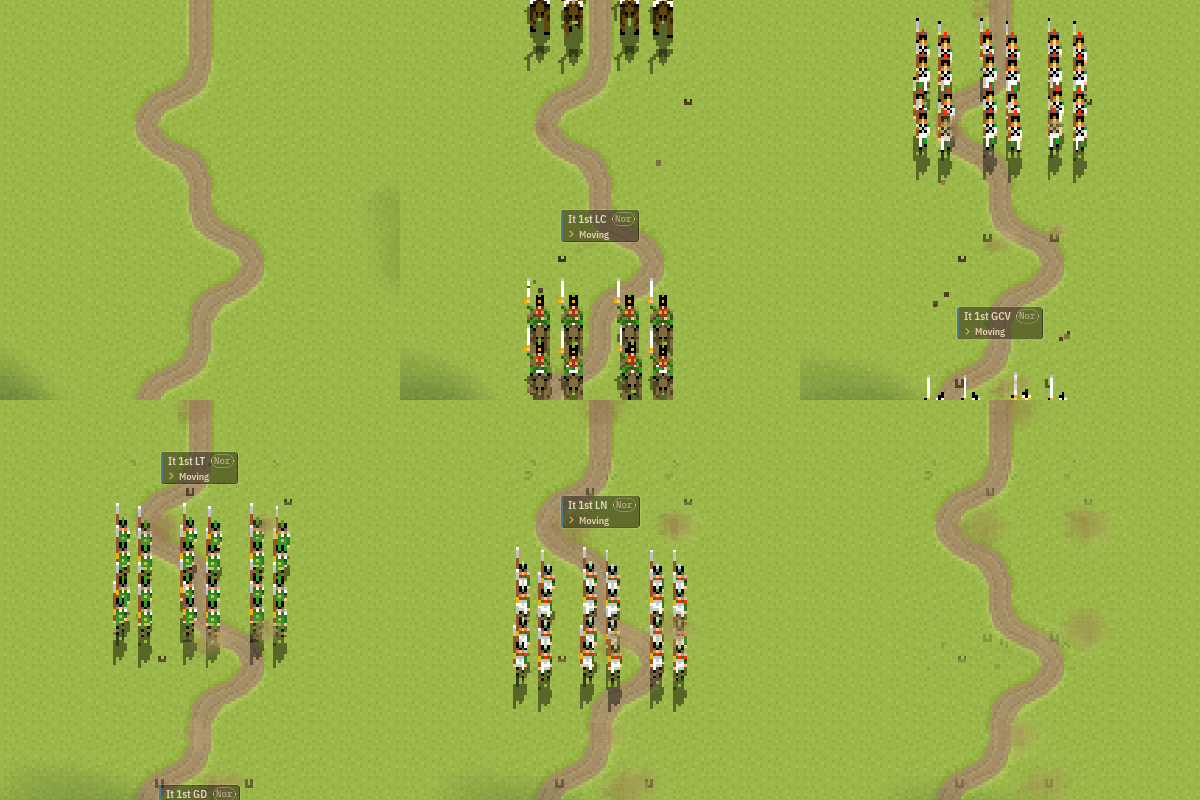
Italy
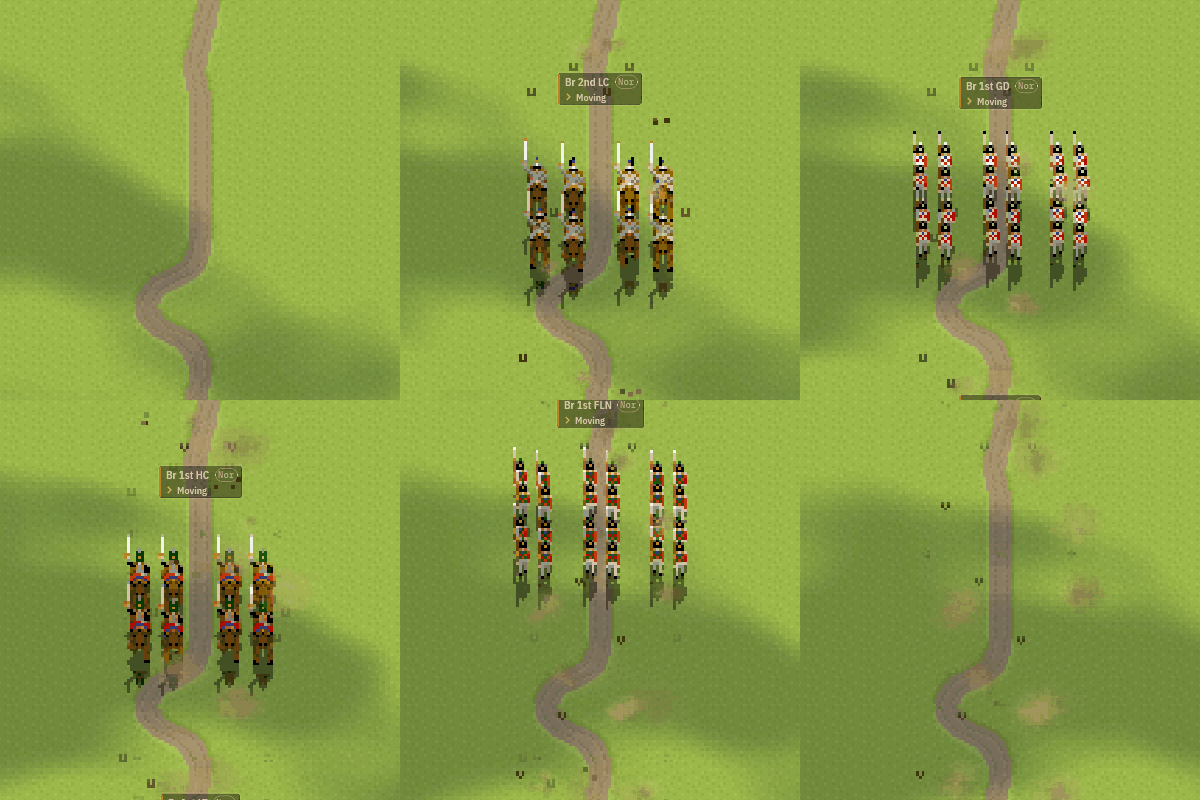
Britain and the KGL
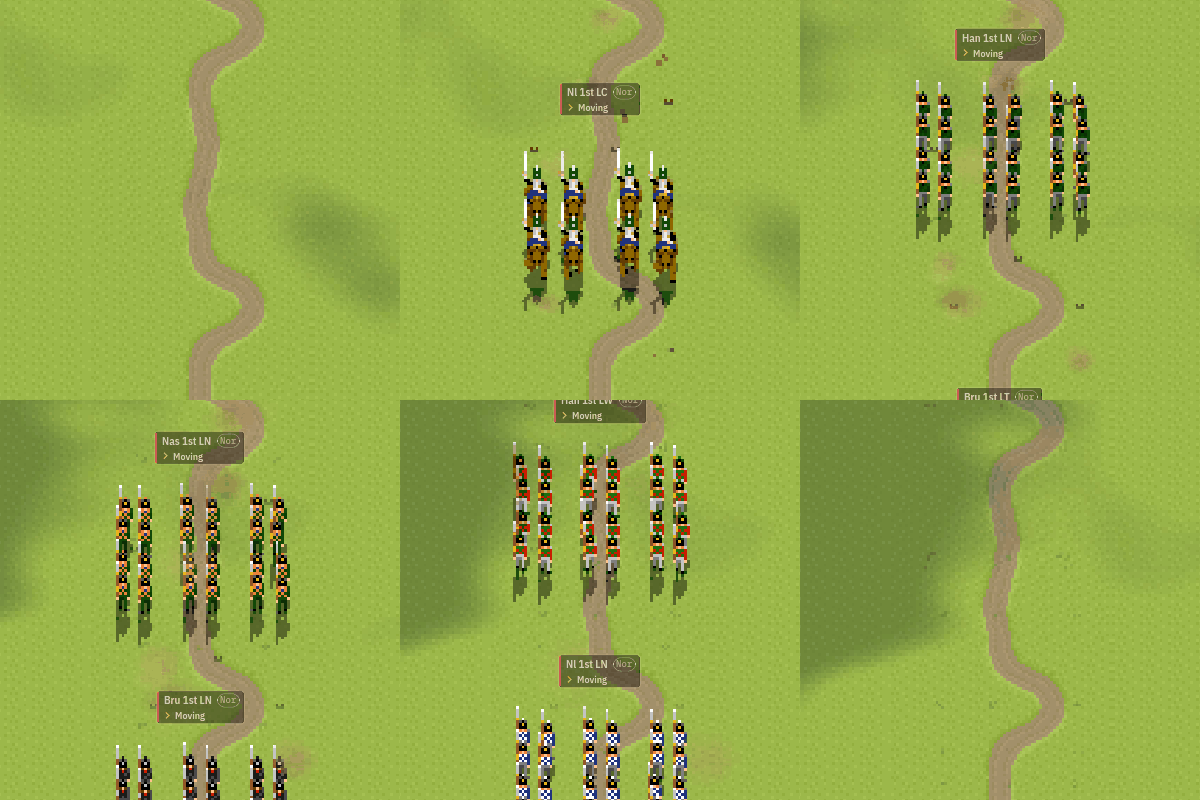
The allies
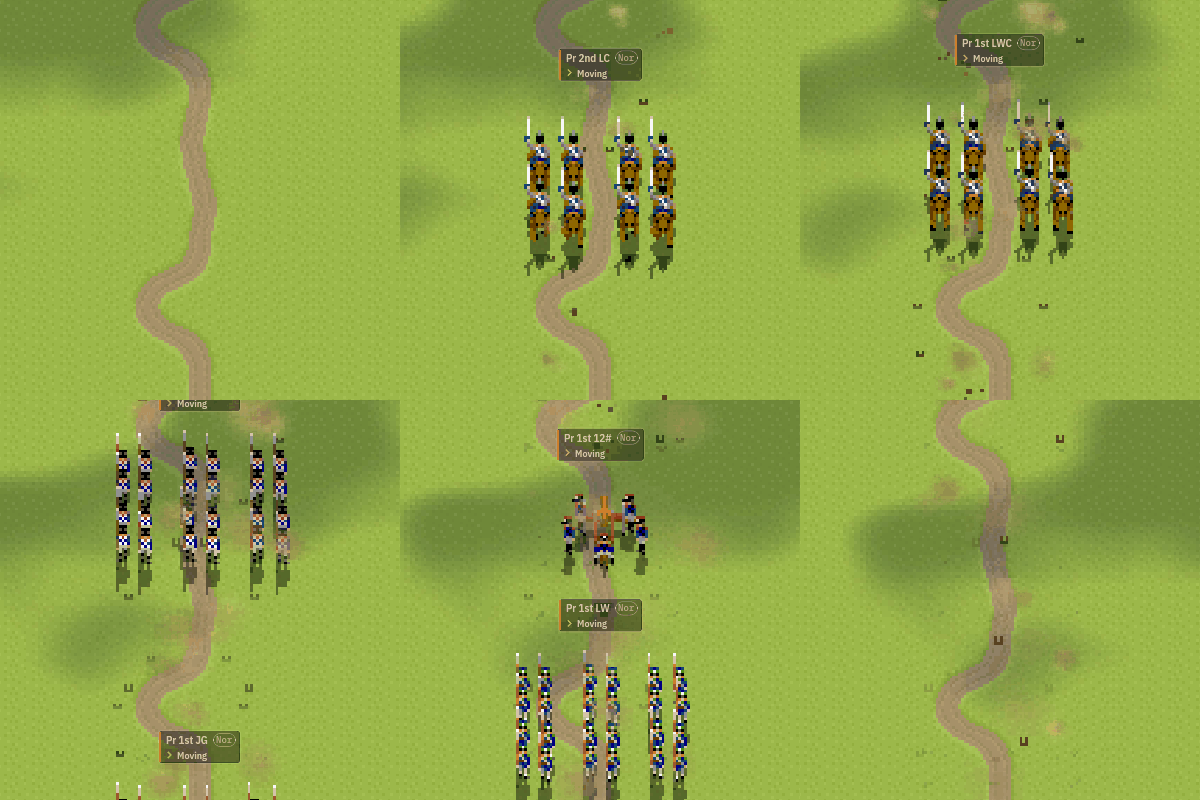
Prussia
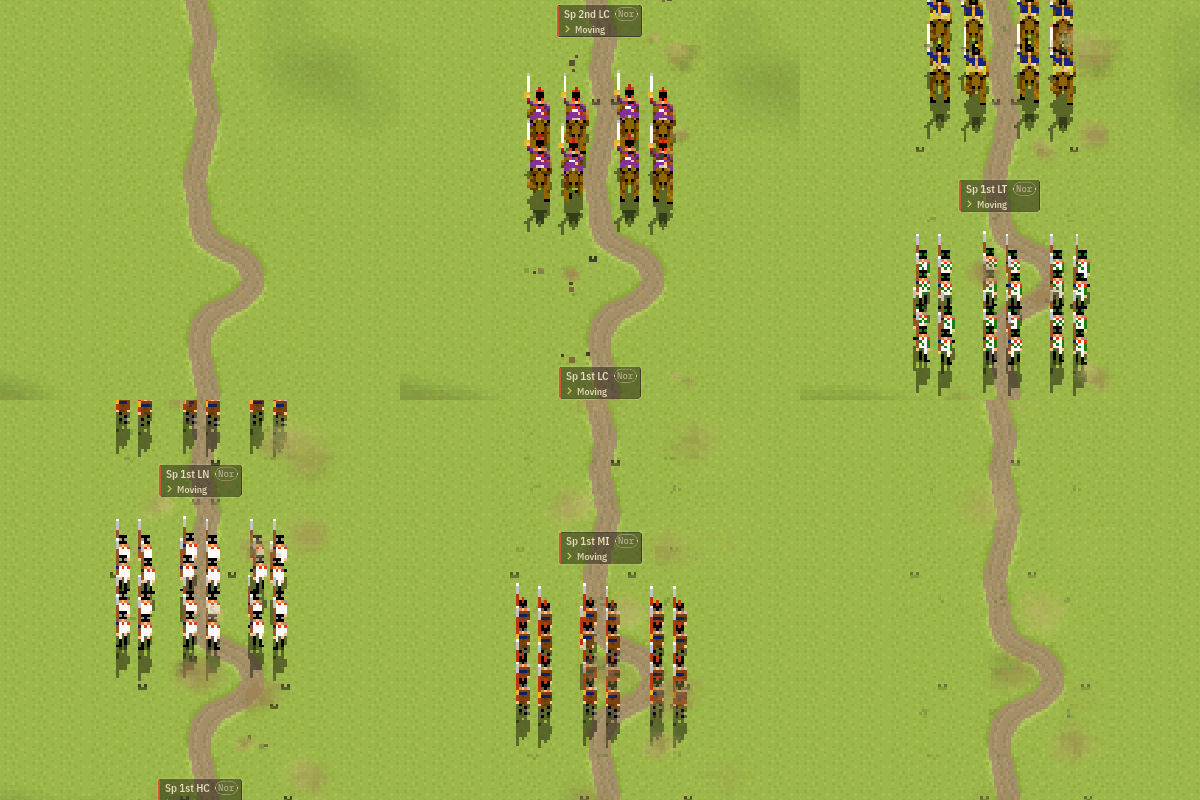
Spain
Paint your own regiments
The uniform editor colours every figure part by part: headgear, coat, facings, belts, the horse's saddle cloth. Pick one colour per part, and light and shade are worked out for you.
Every pose changes at once: standing, marching, firing, charging, fallen. The new uniform goes straight into the roster and onto the battlefield.
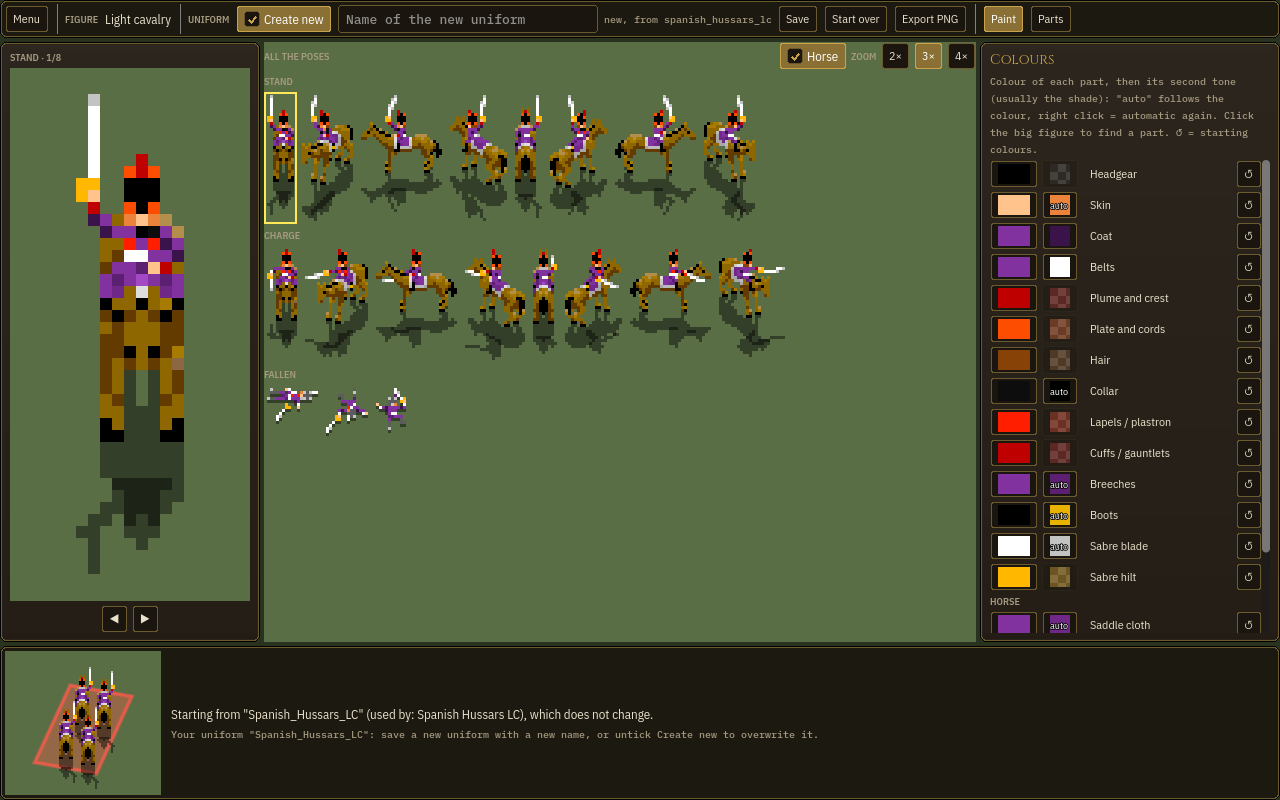
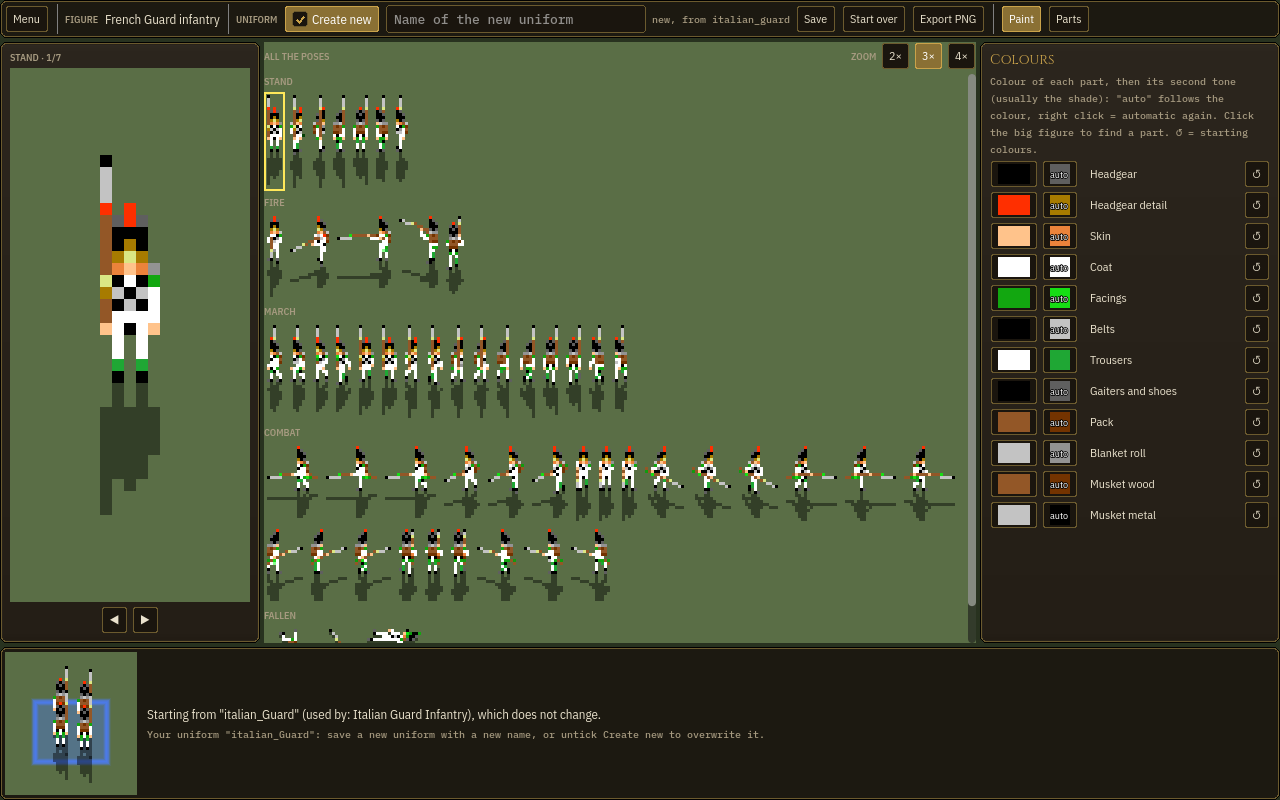
Green facings, red plume. Save. They are in the next battle.
What's in the build
Tabletop rules, quick battles
Napoleon's Battles rules turned real-time: twenty seconds a turn, battles decided in minutes, stands in inches, D100 rolls with every modifier written down.
Formations and drill
Line, column, square, deployed in buildings. Wheeling, about face, backing and side-stepping, limber and unlimber. Orders are final.
Fire and smoke
Automatic volleys, artillery cones and range tables, roundshot on an arc, line of sight, smoke that lingers and drifts with the wind.
Melee and morale
Multi-unit melees, charges, emergency squares, cavalry bounce, disorder, rout, rally, withdrawal and dispersal. The fallen stay on the field.
Terrain
Hills, rivers, fords and bridges, woods, marsh, villages, stone walls and wooden fences, wheat fields trampled by every column that crosses them.
A living world
Cloud shadows, trees in the wind, chimney smoke, startled birds, the light of the hour, a sepia freeze when you pause.
67 unit types
France, Italy, Britain and her allies, Prussia and Spain, from a roster spreadsheet, with stats that change by year.
A defender that thinks
An AI with fixed posts and reserves, mobile groups drawn to the hot spots, delaying actions, countercharges, batteries that lead their targets, routes over bridges and fords.
Objectives and victory
Timed scenarios with objectives to take and hold, judged as marginal or decisive victory, or defeat.
Three editors
A scenario editor with AI roles, a tile map editor with walls, crops and a minimap, and the uniform editor.
A built-in director
Every trailer and every animation on this page is staged by the game itself, frame by frame, with the real rules and real dice.
The campaignNext
The roguelike layer, still to be built: a chain of short battles across a campaign map, a new campaign every run, losses that carry over, veterans with traits, one army to lose.
One army. One campaign.
This is the part still on the drawing board. Every run will be a new campaign, a string of quick battles across crossroads, villages and river crossings. Losses stay lost: a brigade that leaves half its men in a wheat field marches into the next battle at half strength.
Survivors become veterans and earn their traits. Steadier in square. Deadlier against horse. Light cavalry that finds the fords. Lose the army, and a new commander takes the field.
Every campaign ends in a last square. Make it a late one.